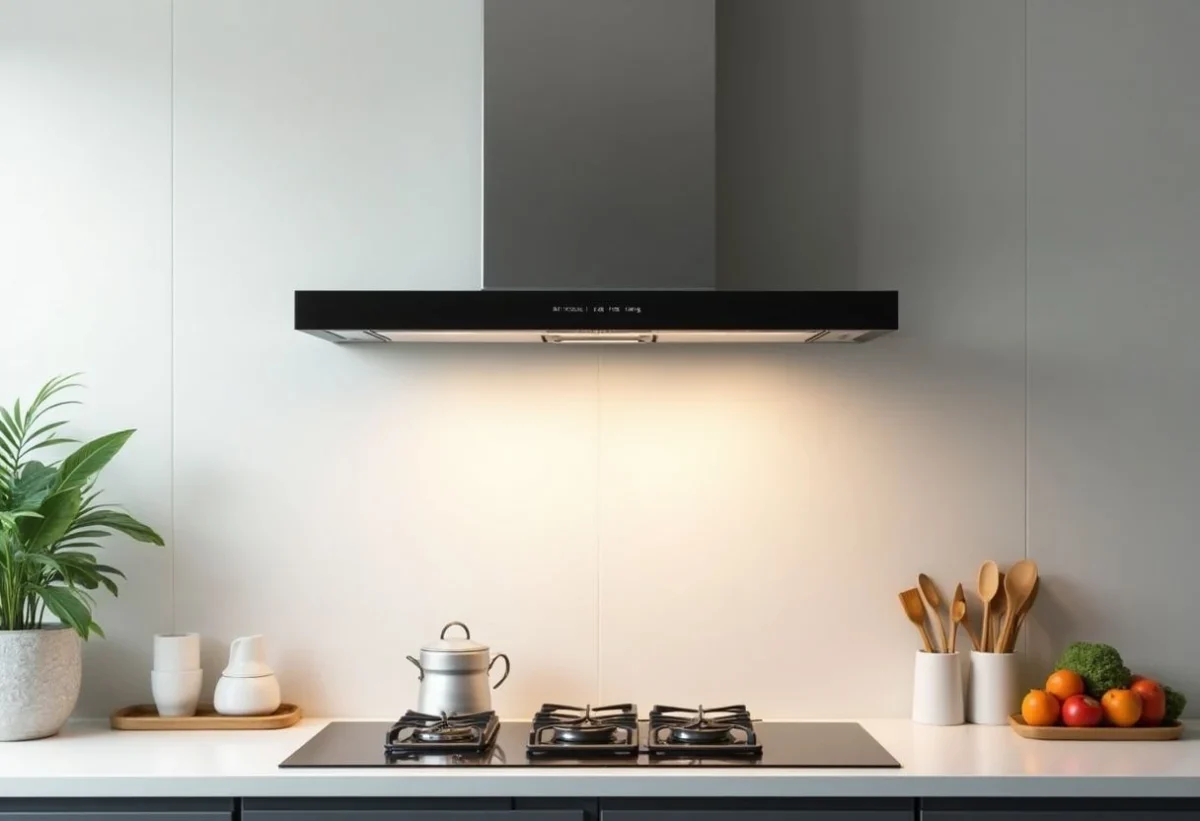
In the world of catering and professional kitchens, the choice of equipment is often a matter of precision and optimization. Among these pieces of equipment, the motorless hood stands out for its specific characteristics. This often-overlooked element plays a crucial role in managing smoke and odors within kitchens. It combines simplicity of design and efficiency while offering appreciable installation flexibility. But what are the particularities of this hood, and why do so many professionals adopt it?
What is a motorless hood?
The motorless hood is an essential component, but sometimes misunderstood, of kitchen ventilation systems. Its simple design conceals formidable efficiency.
Unlike traditional hoods, this version does not integrate a motor. It essentially consists of a structure that captures smoke, vapors, and odors. The role of the motor, often integrated elsewhere in the system, is to suck up these undesirable elements to purify the ambient air.
Thus, a motorless hood proves to be a versatile and adaptive option for kitchens where space and configuration require increased customization.
The advantages of a motorless hood
The absence of a motor in the design of this hood does not mean a lack of efficiency. On the contrary, it offers several notable advantages to those who choose to integrate it into their kitchen.
- Adaptability: Without an integrated motor, the hood can be installed in various configurations, facilitating its adaptation to all spatial constraints.
- Simplified maintenance: Fewer mechanical components mean less maintenance and increased longevity.
- Reduced cost: By opting for a motorless solution, initial installation costs can be lower, often allowing for significant savings.
- Integration: It can be connected to a centralized ventilation system, often more powerful and efficient, especially in large kitchens.
Installation and integration
Installing a motorless hood requires a different approach compared to traditional installations. The absence of an integrated motor means that the ventilation system must be well thought out to ensure effective suction.
The installation process often begins with evaluating the space and the specific needs of the kitchen. The hood must be strategically placed to optimally cover the cooking areas.
Next, it is connected to an external air extraction system, which can be located outside the kitchen, often on the roof or in a technical area. This configuration reduces noise disturbances within the kitchen, a significant advantage for the staff.
Choosing the ideal hood for your kitchen
Choosing a motorless hood requires a good understanding of your culinary space’s needs and evaluating the options available on the market.
- Assess needs: The size of the kitchen, the type of cooking equipment used, and the volume of prepared food influence the choice of hood.
- Consider available space: The space above the cooking equipment must be sufficient to accommodate the hood without clutter.
- Consult a professional: Working with an experienced installer ensures an installation that complies with safety and performance standards.
- Anticipate future changes: Think about the future of your kitchen, as a well-chosen hood should be able to adapt to potential modifications or expansions.