
We wake up with lower back pain, spend six hours in front of a screen without moving from our chair, and in the evening we snack while watching a series, postponing the moment to sleep. This scenario is experienced by most of us several times a week. Improving our daily health does not require a grand theoretical plan: it starts with identifying the concrete situations that weaken us, and then adjusting a few specific habits.
Remote Work and Sedentary Lifestyle: The Invisible Trap of the Home Office
Since the widespread adoption of remote work, feedback from the field has converged: musculoskeletal pain, gradual weight gain, and visual fatigue by the end of the day. The problem is not a lack of exercise. It’s sitting uninterrupted for stretches of three or four hours.
The first concrete measure is to schedule an active break every 45 minutes. We get up, walk to the kitchen, and do a few squats. Recent preventive recommendations emphasize this regular micro-mobility as a health lever more effective than a single workout at the end of the day.
The setup of the workstation also matters. A screen positioned too low forces the neck forward. A simple stand to raise the monitor to eye level reduces cervical tension. If working on a laptop, a separate external keyboard radically changes posture. Accessible explanations of these mechanisms can be found in the health section of Je Comprends Enfin, which breaks down these types of topics without medical jargon.
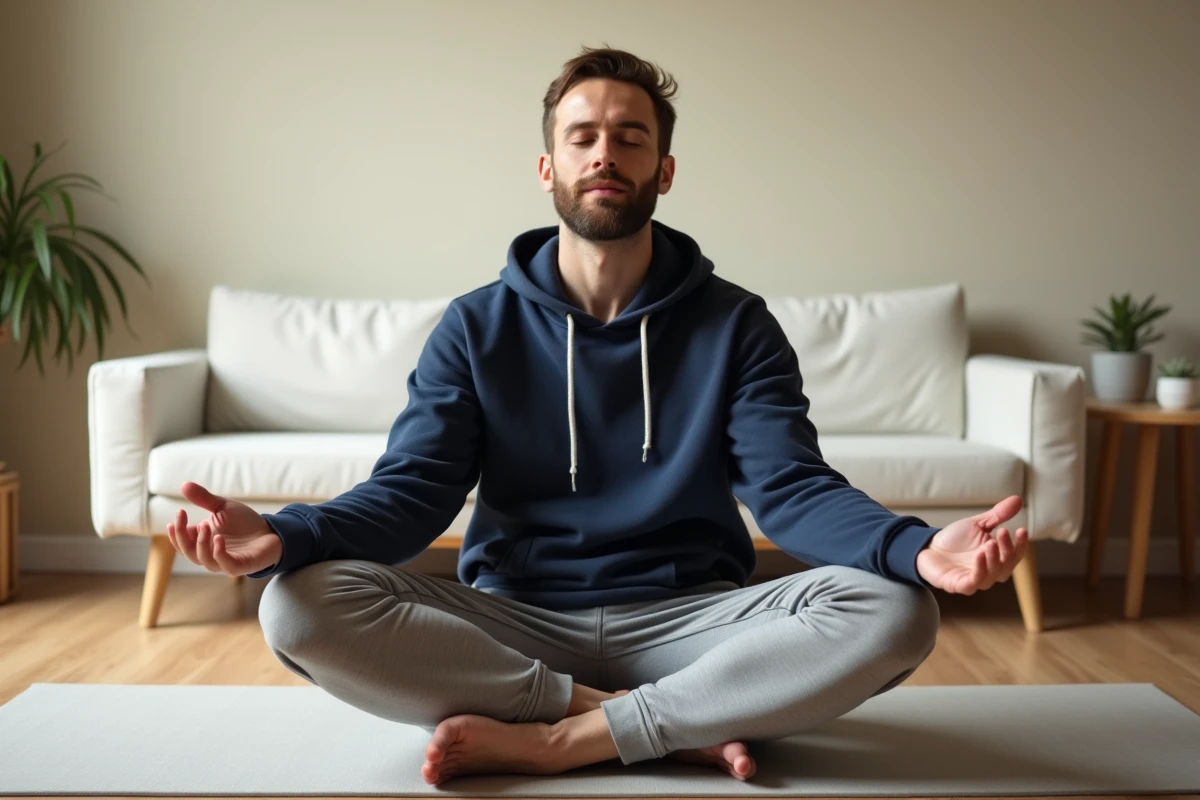
Screens and Sleep: Why Turning Off Before Bed Makes a Difference
The impact of screen exposure on sleep goes beyond the simple advice to “relax in the evening.” Health authorities, including the WHO, have issued multiple advisories between 2019 and 2024 to warn about blue light, cognitive stimulation, and the disruption of circadian rhythms caused by late-night screens.
Eliminating screens at least 30 minutes before sleeping is not a luxury of well-being. It’s a measure that has a measurable effect on sleep quality. The challenge, in practice, is that the phone also serves as an alarm clock, e-reader, and radio. So we keep it on the nightstand.
An operational solution: place the phone in another room at a fixed time and use a traditional alarm clock. This also eliminates the reflex to check notifications in the middle of the night. For children and young adults, recommendations go further and advocate for parental co-presence in front of screens and a total ban on screens in the bedroom.
The Particular Case of Social Media
Public Health France highlights the effect of social media on mental health as a significant determinant. The mechanism is concrete: passive scrolling triggers cycles of social comparison that increase anxiety. We are not talking about a vague influence, but a factor recognized by health authorities.
Reducing time spent on passive scrolling, even by a few minutes a day, produces noticeable results on mood and concentration. Disabling non-priority notifications remains the simplest and most effective gesture to regain control.
Daily Nutrition: Organizing the Plate Rather Than Counting Calories
We are repeatedly told to “eat balanced,” but in reality, the true difficulty is the lack of time between noon and returning to work. The reflex for a sandwich or reheated industrial meal is not a gourmet choice; it’s a logistical constraint.
- Preparing two to three meals on Sunday to cover lunches for the week (batch cooking) avoids food decisions made in a hurry.
- Keeping plain frozen vegetables in the freezer allows you to add a portion of fiber to any dish in five minutes.
- Replacing fruit juices with water or herbal teas reduces quick sugar intake without willpower effort.
Organization takes precedence over discipline. When a healthy meal is already prepared in the fridge, we eat it. When we have to prepare it after coming home tired, we order a pizza. The key is not motivation; it’s logistics.

Physical Activity and Mental Health: Moving Without a Sports Program
Recent preventive recommendations do not require running a half-marathon. They emphasize the regularity of moderate movements integrated into the day. Walking to get bread, taking the stairs, doing housework: these activities count.
What makes the difference is consistency. Three short walks a week provide more benefits than one big session a month followed by three weeks of inactivity. Feedback varies on the exact threshold of recommended daily steps according to age, but the principle remains the same: every minute in motion is better than a minute sitting.
The Link with Mood and Stress
Regular physical activity affects anxiety and depression through direct physiological mechanisms. We are not talking about “clearing the mind” as a metaphor. Movement alters the levels of neurotransmitters involved in mood regulation.
For remote workers, incorporating a twenty-minute walk during the lunch break combines two benefits: a mental break from work and physical activation. It’s a simple adjustment that requires no equipment or subscription.
Improving daily health relies on targeted adjustments, not a total overhaul of one’s lifestyle. Setting up your workstation, turning off screens before bed, organizing meals in advance, and walking regularly: each isolated action may seem trivial, but their accumulation transforms quality of life over several months. The hardest part is not knowing what to do; it’s starting with one change and sticking to it.