
The same shoe size does not guarantee the same comfort depending on the brand. Scholl and Birkenstock, despite their solid reputations, apply sometimes opposing designs in fit and arch support. The choice depends as much on individual anatomy as on daily needs.
Some foot shapes poorly tolerate rigid anatomical insoles, while others require increased lateral support. A few models from each brand receive contradictory reviews from podiatrists, complicating the decision. Determining the best-suited pair requires a careful examination of technical criteria and personal usage.
Scholl and Birkenstock: two approaches to comfort to discover
Long neglected, the question of shoe comfort has become prominent for both women and men. Scholl and Birkenstock embody two distinct ways of considering foot relief and ergonomics. Frequent walkers, professionals who are often on their feet, or those who need to wear orthopedic shoes closely examine technical points: anatomical insole or orthopedic insole, memory foam or cork, leather or synthetic materials.
The differences between Scholl and Birkenstock are found in the composition of the insoles, the shape of the fit, and the design philosophy. Scholl focuses on lightness, flexibility, and patented technologies that support the arch to limit pain. Birkenstock emphasizes firm support, a cork and latex sole that eventually conforms to the shape of the foot, ensuring stability and weight distribution.
To compare these two visions, one only needs to look at the variety of models according to morphology:
- flat feet or pronounced arch
- need for custom orthopedic insoles
- professional or domestic use
Choosing comfortable shoes also involves questioning foot health, frequency of use, and context: urban mobility, long periods of standing, or regular walking. Durability, style, and material choice, whether leather, foam, or cork, should not be overlooked. Those who wish to analyze the differences between Scholl and Birkenstock more finely can consult comparisons to better identify the criteria to prioritize for foot preservation.
What criteria to prioritize according to the shape of your feet and your daily needs?
The morphology of the foot requires rethinking shoe selection well beyond mere appearance. Observe the structure of your arch: a flat foot does not require the same support as a curved foot. Fortunately, suitable models are multiplying today. For flat feet, the anatomical insole optimizes contact and limits fatigue. For well-defined arches, the orthopedic insole must provide stable support for a more assured step.
The choice of materials directly influences foot well-being. Cork or wood absorbs shocks and supports movement, while leather promotes better ventilation, and memory foam gently envelops the foot. These parameters play a crucial role in avoiding or alleviating pain, whether standing or during sustained movement.
Some guidelines for choosing suitable shoes:
- Evaluate the width of the fit: a shoe that is too tight or too loose can create pressure points and disrupt step ergonomics.
- Pay attention to the flexibility of the materials and the sole’s ability to conform to the shape of the foot.
- For work or long days, prioritize orthopedic models that help limit fatigue.
Aesthetics, comfort, sole durability: every detail points towards a pair that truly meets your requirements. Choosing a shoe that fits your foot is about finding the right balance between support, flexibility, and shock absorption capacity. The range of models available today allows for adjusting the choice to individual morphology and lifestyle, transforming each step into a promise of lightness.
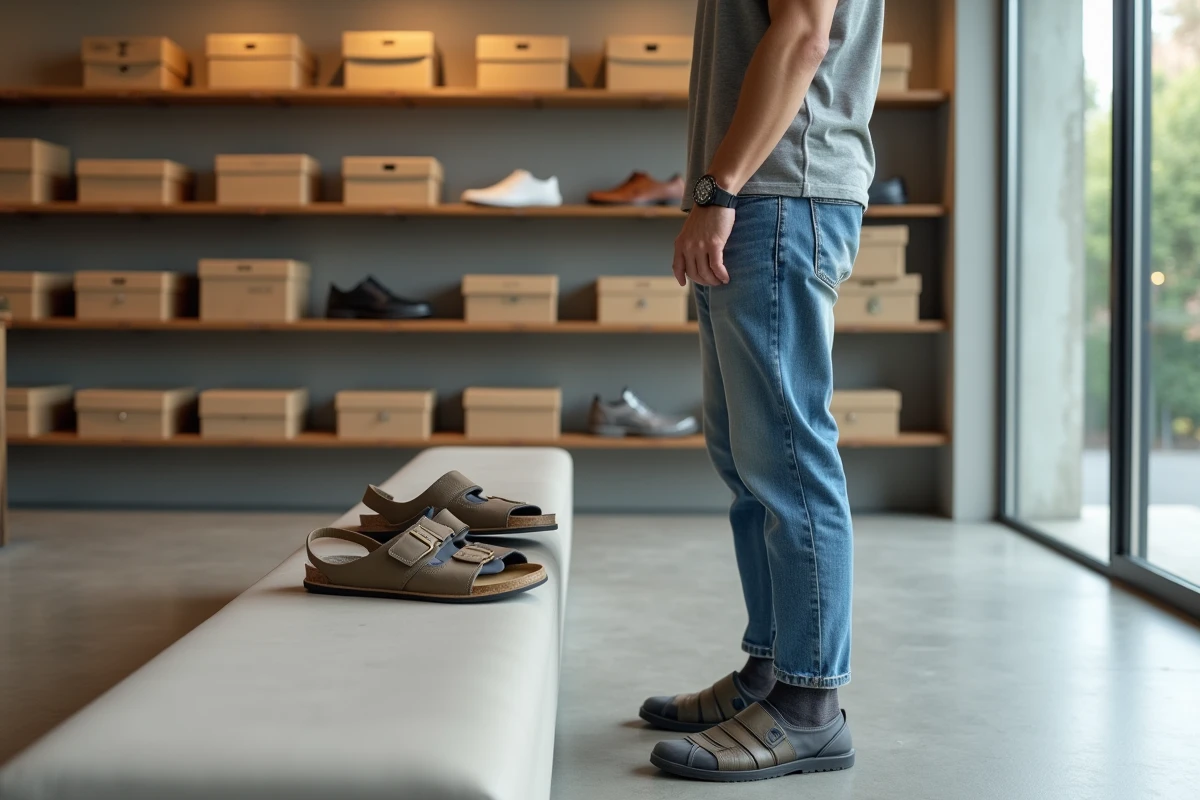
Practical tips for choosing between Scholl and Birkenstock and enjoying true comfort every day
To find the pair that suits you, start by observing the shape of your foot and the situations in which you will wear your shoes. Models with anatomical insoles are ideal if your feet are put to the test during standing or sustained walking. If you are looking to ease recurring pain related to a sensitive arch or flat feet, consider orthopedic insoles.
The choice of materials remains crucial: cork naturally absorbs shocks and limits sweating, while leather offers good breathability and gradually adapts to the shape of the foot. Some models focus on memory foam that precisely envelops the foot. For those who do not wish to compromise on daily well-being, this detail makes a difference.
Also take the time to check the width of the fit and the flexibility of the sole: a model that is too rigid or too tight can cause lasting discomfort or even pain. For professional use, select orthopedic shoes designed to support long days.
- Choose models certified by the Forest Stewardship Council (FSC) if ecological commitment guides your choice.
- Regularly maintain leather or cork with suitable products to extend the lifespan of your shoes.
- Adjust your selection to the context: open sandals for summer, closed models for the city or office.
Responsible fashion does not sacrifice comfort. Some women’s models manage to combine elegance with respect for foot health. The price often reflects the quality of materials and brand expertise, but there are also outlet alternatives to reconcile budget and technical requirements. Walking well-shod means choosing the alliance of science and style, making comfort a discreet yet decisive ally throughout the seasons.