The sports coaching market in France has significantly expanded in recent years. Between independent coaches, matchmaking platforms, and gyms offering personal training, there is no shortage of options. Finding a sports coach suited to one’s needs requires checking specific elements, starting with the regulatory framework that few individuals truly understand.
Professional card and diplomas: the regulatory filter that clients overlook
In France, the paid supervision of a sports activity is reserved for holders of a diploma, title, or professional qualification certificate registered with the RNCP or the Specific Directory, and declared to the State. This requirement translates into the issuance of a professional sports educator card, regardless of the place of practice: gym, home, outdoors, or online.
Controls have tightened with the increase in independent coaches. Asking for the professional card number remains the most reliable gesture to ensure a coach’s seriousness. This number can be verified on the Ministry of Sports’ website.
Beyond the basic diploma, specializations matter. A BPJEPS in fitness activities does not cover the same skills as a STAPS license with a focus on sports training or a diploma in adapted physical activity (APA). A coach working with vulnerable populations (seniors, people in rehabilitation) must hold additional qualifications and ideally collaborate with the treating physician or a physiotherapist.
Specialized platforms like 1sport1coach.com allow filtering profiles by skills and geographical area, simplifying this initial verification step.

Specialized or generalist sports coach: a choice that changes the results
Most articles advise “defining your goals” before looking for a coach. The advice is correct but insufficient. The real question is about the match between your goal and the professional’s specialization.
A generalist coach is suitable for overall fitness or motivational support. In contrast, specific goals (preparation for a competition, post-injury rehabilitation, weight loss with medical constraints) require targeted expertise.
The case of coaching for seniors illustrates this distinction well. Coaches trained to work with individuals over 60 focus on specific areas:
- Fall prevention and balance work, with exercises adapted to joint limitations
- Maintaining functional autonomy (getting up, climbing stairs, carrying everyday loads)
- Post-pathology programs (stroke, heart failure) in coordination with the medical team
A competent senior coach works in conjunction with the treating physician, which requires training in adapted physical activity, not just a standard BPJEPS. This criterion is often underestimated by individuals seeking personalized training for an elderly parent.
Home, gym, or online coaching: what each format really implies
The format of the sessions is not just a matter of comfort. Each modality has implications for the quality of follow-up, available equipment, and pricing.
Home coaching offers a private setting that suits individuals intimidated by a gym environment. The coach adapts to the available space and often brings their own equipment (resistance bands, dumbbells, mats). The downside: the lack of heavy equipment limits certain goals such as advanced muscle gain.
In the gym, access to machines and free weights opens up a wider range of exercises. Personal training in the gym also allows the coach to observe your posture from different angles, with mirrors and an appropriate floor. The fee sometimes includes access to the gym, sometimes not. Check this point before committing.
Online coaching has been structured over the past few years. Video conference sessions allow for real-time follow-up, and training tracking apps facilitate reporting between sessions. Feedback from practitioners varies on this point: some find remote posture correction insufficient, while others appreciate the scheduling flexibility and generally lower cost.
Initial exchanges with a sports coach: concrete signals to observe
Once the verification of diplomas is done and the format chosen, the quality of the first contact often determines the outcome. A few elements deserve particular attention during the trial session or the first meeting.
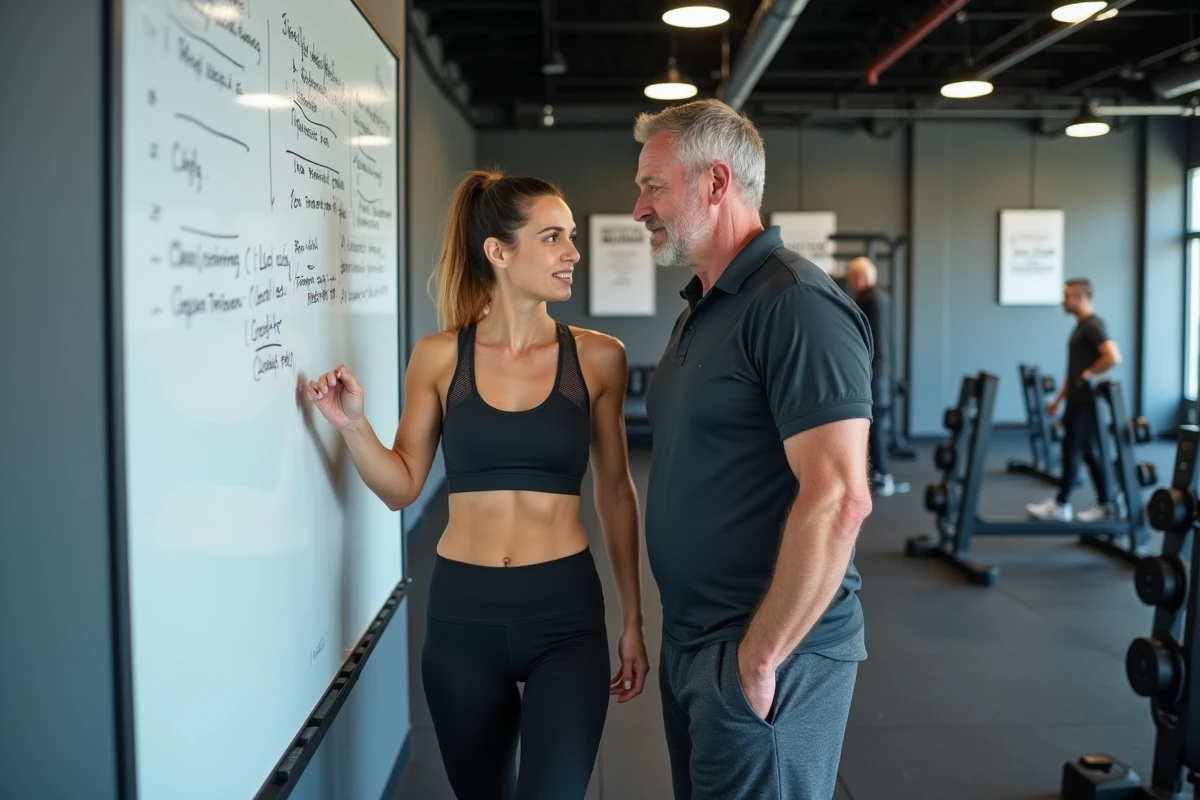
A serious coach asks questions before proposing a program. They inquire about your sports history, any injuries, your lifestyle, and your time constraints. If the first session starts directly with exercises without a prior assessment, it’s a warning sign.
Pedagogy is as important as technical skill. A good coach explains why they choose a particular exercise, not just how to execute it. This ability to convey information is difficult to assess on a CV, hence the usefulness of a trial session.
- Ask if the coach offers an initial assessment (measurements, mobility tests, fitness evaluation)
- Check that they adapt exercises in real-time if you report pain or discomfort
- Observe if they explain the logic of progression between sessions, not just the session of the day
- Inquire about their cancellation policy and the minimum frequency they recommend to achieve results
The rapport does not replace skills, but it conditions consistency. A technically excellent coach with whom you do not feel comfortable will produce fewer results than a competent professional whose approach motivates you to return each week.

The choice of a sports coach relies on a verifiable triptych: valid diploma and professional card, specialization suited to your goal, session format compatible with your constraints. The trial session remains the best test. It will allow you to assess the pedagogy, listening skills, and adaptability of the professional, three qualities that no CV can guarantee on its own.