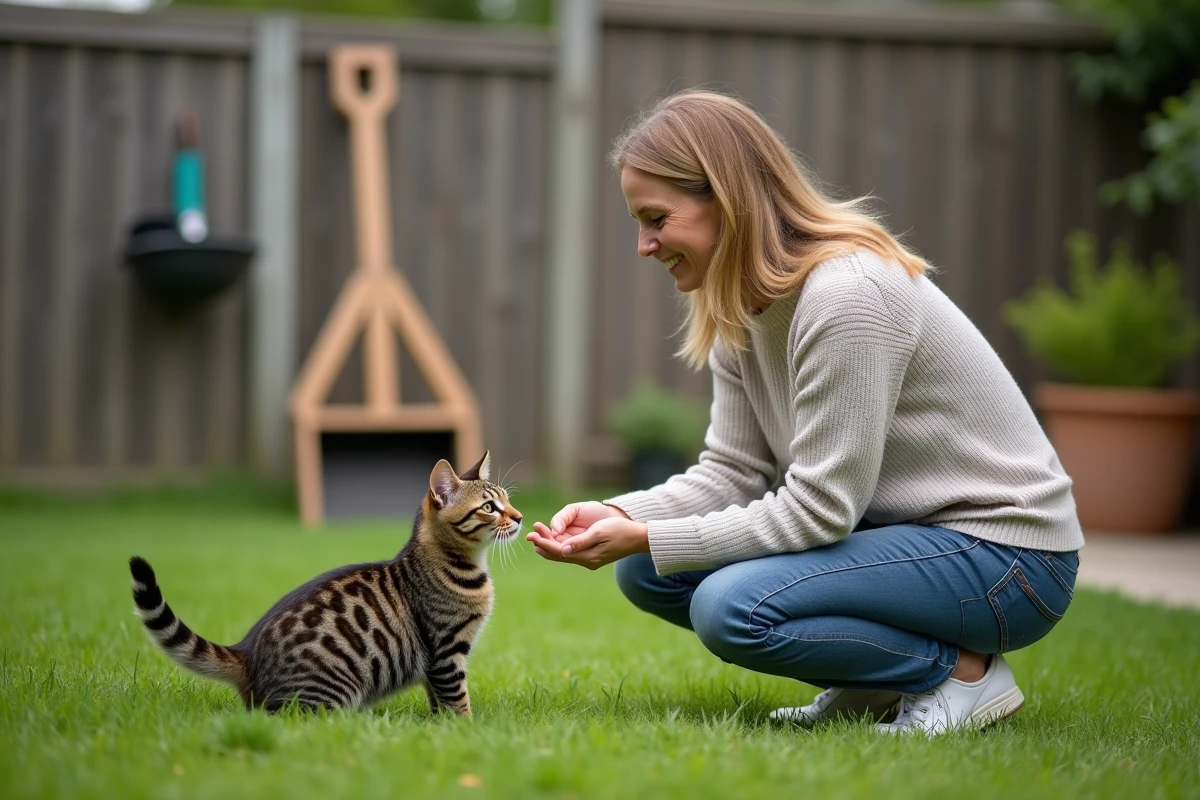
A cat uprooted from its familiar surroundings forgets nothing. Even the boldest can, in a matter of hours, turn into fugitives or suddenly develop unpredictable behaviors. The reality is harsher than some owners want to believe: a feline used to roaming outside does not spontaneously find its bearings after a move, and the temptation to escape remains strong, even after several days of apparent adaptation.
Veterinarians recommend waiting at least two weeks before considering the first outing, but this timeframe is never fixed. It all depends on your cat’s temperament and the layout of the new home. It is better to rely on specific precautions to navigate this delicate phase without a hitch.
Why moving disrupts your cat’s bearings
A move, for a cat, is the sudden loss of an entire invisible world: that of its territory. It is not just about walls, furniture, or smells: every corner, every familiar sound, every mark left on the floor weaves the fabric of its daily security. Stress invades abruptly when this universe fades away. The cat’s environment regulates its balance: without it, tension rises, sometimes to the point of panic.
In its new home after moving, the cat must rebuild everything. It explores, hesitates, rubs against corners, trying to rediscover something familiar in small touches. The stacked boxes smell of elsewhere, the furniture has changed places, and the sounds from the street are no longer the same. Reactions vary: some lose their appetite, others become restless, and still others start marking their territory insistently.
The cat’s behavior after moving reveals its own way of approaching novelty. It oscillates between the subtle call of the old territory and a persistent distrust of the new home. Taking your cat out after a move with Maison Créa is primarily about arming yourself with patience and vigilance to secure the perimeter and allowing the animal time to acclimate to every inch of its new universe.
A cat let outside too quickly risks attempting an expedition back to its old home, which may be very far away. It is better to spread out the discovery and make the new home after moving a new refuge, where the cat will return on its own, reassured by your attentions.
What precautions to take before and during the first outing in the new neighborhood?
Before opening the door to this unknown territory, several checks are necessary to protect your cat and prevent it from getting lost. Identification is crucial: a microchip or tattoo is your best guarantee if a cat strays after a move. Remember to update your contact details with the national registry: a simple oversight can have serious consequences. The transport crate or carrier serves as a refuge during travels, especially for moving between the old and new homes. It reassures the cat, which finds its scents and a sense of stability amid the transition.
Once in the new home, limit exploration to a single room for the first few days. Place the litter box, cat tree, and bowls there. This cocoon offers a reassuring buffer, where the animal can establish its marks without being overwhelmed by novelty. Before considering the first outing, do a complete walkthrough of the home: poorly closed windows, holes in the fence, access to the roof or street—every detail counts to prevent disappearances.
Here are the key points to remember to prepare for this moment calmly:
- Use a harness suitable for its body type, even if the beginning seems challenging. The cat should gradually get used to it, first indoors, then outside.
- Choose a quiet time for the outing, away from sudden noises or frequent traffic. A calm environment reduces the risk of flight due to fear.
- Inspect the garden for fleas and ticks, especially if the vegetation is dense or poorly maintained.
Stay present during this first exploration. Let your cat proceed at its own pace, observe, sniff, and turn back if necessary. The more cautious will wait for weeks before daring to cross the threshold. Do not force anything: trust is built step by step. Your vigilance and patience are your best allies to ensure that this first outing after the move does not turn into a headache.

Tips for ensuring your cat’s first exploration goes smoothly
Discovering a new home disrupts the cat’s balance, but some well-established habits can help it feel at home. Focusing on routine provides the animal with stable reference points: unchanged meal times, familiar gestures, and petting at key moments. These rituals reassure, even amid the surrounding chaos.
Before the first outing, prioritize a peaceful environment. A quiet garden, free from commotion or surprises, fosters trust. The presence of other cats or new housemates should be managed carefully: never direct confrontation, but gradual, distant meetings to limit tensions and markings.
To help your cat acclimate to this new space, here are some useful tips:
- Place the cat tree near a window. From this strategic perch, the cat can observe the outside, analyze scents and movements, and familiarize itself safely with its surroundings.
- Keep its usual litter box in the same place as before. This small detail serves as a reassuring anchor in a disrupted context.
Some cats struggle with change: they hide, refuse to eat, or remain withdrawn. Give them this time to retreat; do not try to rush the adaptation. Observe: a low tail, flattened ears, unusual meowing—each sign expresses the need to slow down.
Offer them items infused with the scent of the old territory: a blanket, a toy, a cushion. These olfactory bridges facilitate the transition. In the case of cohabitation with other animals, introduce each newcomer gently, in short sessions, in a positive atmosphere. This way, the cat gradually acclimatizes to the environment of its new home, at its own pace.
Patience, observation, and respect for adaptation times: it is at this price that the cat will turn the new territory into a safe space, and that, in a few weeks, it will roam there with the same confidence as before. There is no rush. Trust is not imposed; it is built, one discovery at a time.