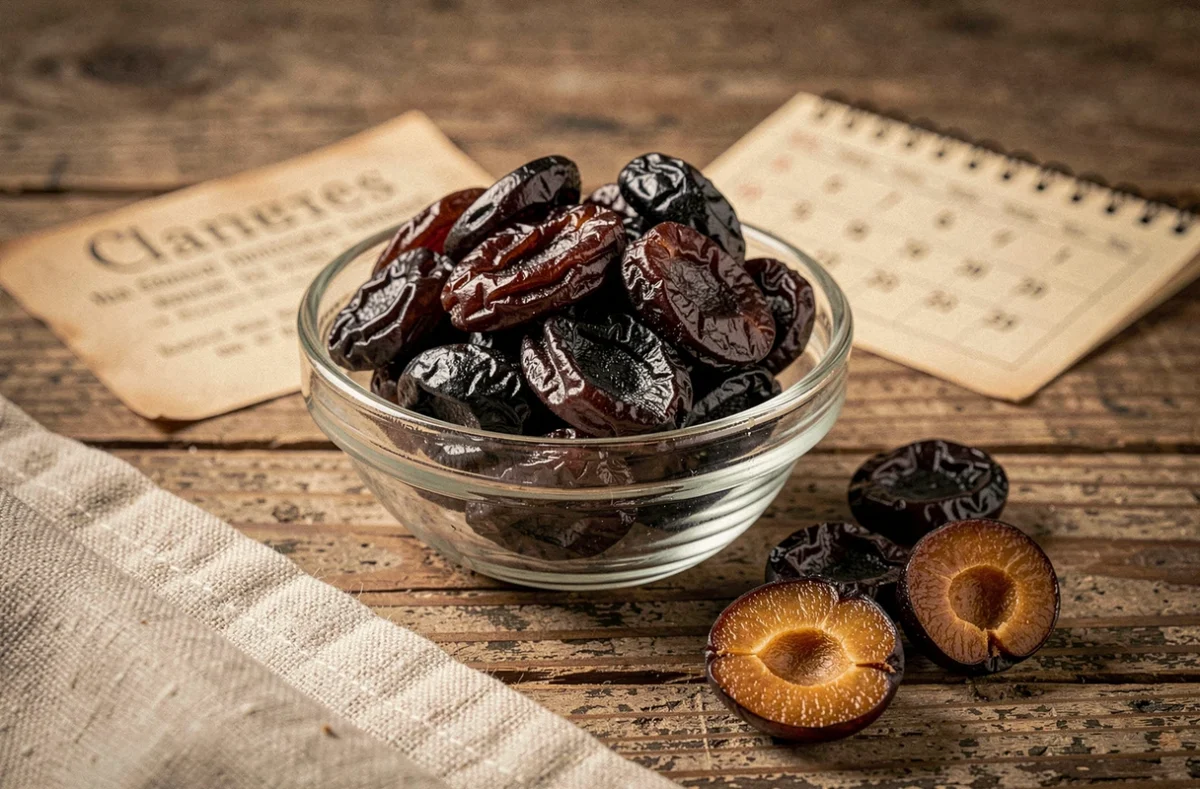
Prunes carry a “best before” mention rather than a strict expiration date. This distinction radically changes the risk analysis. Understanding what the DDM really means for a dried fruit, and what the refrigerator contributes or does not contribute to its stability, helps avoid both waste and poisoning.
Water activity and microbiological stability of prunes
A prune is a fruit whose water content has been drastically reduced through prolonged drying. This low water activity (aw) effectively slows bacterial proliferation much more than cold does. Classic pathogens (salmonella, listeria) do not develop on such a dry substrate.
The residual risk concerns xero-tolerant molds and their mycotoxins, capable of colonizing low aw environments. Visually, contamination manifests as a white or greenish powdery film, a sour smell, or a fermented taste. In the absence of these markers, the microbial load of a prune generally remains negligible, even several months after the DDM.
We recommend never consuming a prune that shows an abnormal sticky texture, suspicious surface crystallization, or an acetic aroma. These signals indicate advanced degradation that cold does not correct.
DDM and DLC on prunes: what the label really says
The DDM (minimum durability date) is recognized by the wording “best before.” It indicates the end of the period during which the manufacturer guarantees the appropriate organoleptic qualities: softness, cooked plum aroma, uniform dark color. It is not a health date.
The DLC (expiration date), preceded by “to be consumed by,” applies to perishable goods (meat, fresh milk, refrigerated dishes). Prunes do not fall into this category. Any guide that talks about “expired prunes” in the strict sense is misusing the term: a prune whose DDM has passed is not “expired” in the regulatory sense.
The question of storing prunes in the fridge arises when the bag has been opened for a long time or when the DDM is significantly exceeded. In this case, sensory evaluation takes precedence over the printed date.
Refrigerator and prunes: real effects of cold on a dried fruit
Placing prunes in the refrigerator slows down the oxidation of sugars and limits the development of the few molds capable of growing on a dry substrate. Cold extends the window of organoleptic quality, not the safety of a product that is already stable at room temperature.
Cold does not make a damaged prune safe for consumption. If molds have settled before refrigeration, cold stops their growth without eliminating the toxins already produced. This is a point we regularly observe in public inquiries: the refrigerator does not have a sanitizing function.
Storage conditions in the refrigerator
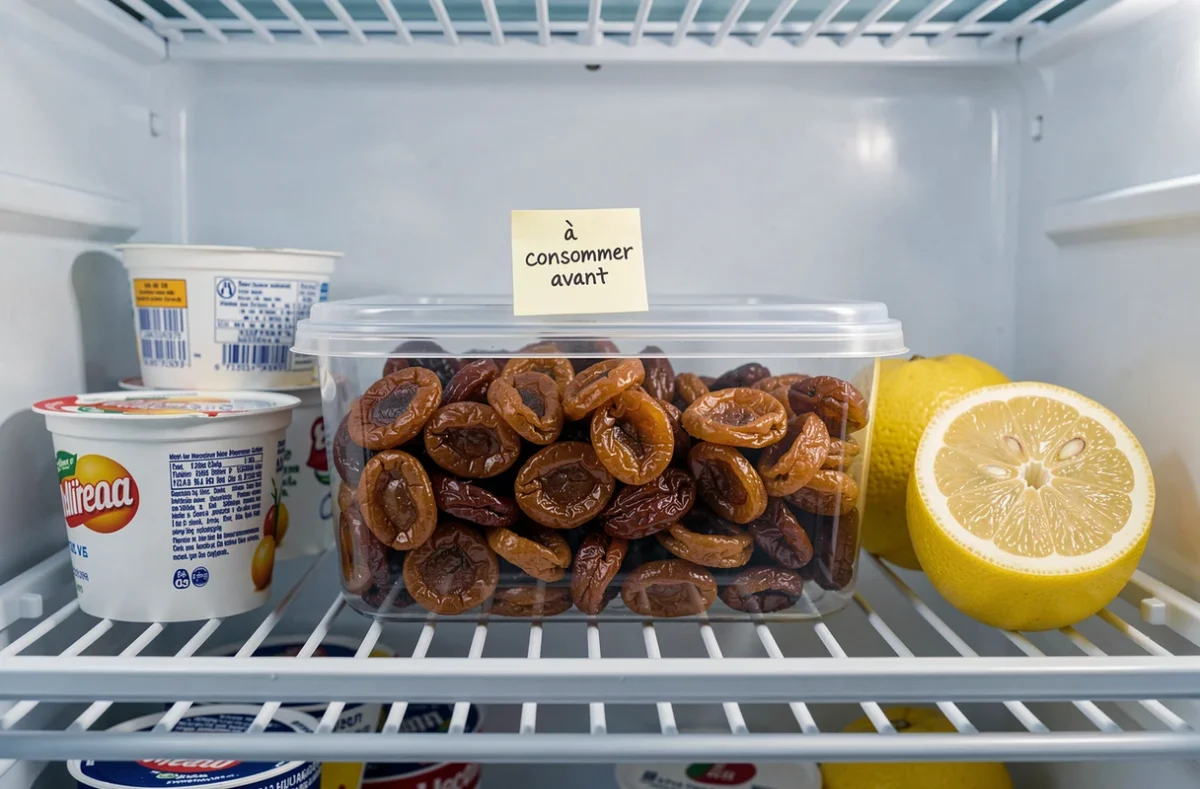
The relative humidity of a domestic refrigerator is often at a high level, which can paradoxically rehydrate prunes if the container is not airtight. A rehydrated prune sees its water activity rise, reopening the door to microbial contamination.
- Store prunes in an airtight container (glass jar, food box with a seal) to prevent any moisture uptake.
- Keep prunes separate from strong-smelling foods (cheeses, onions): dried fruits easily absorb surrounding volatile compounds.
- Check for the absence of condensation in the container after a few days, a sign of insufficient sealing or too abrupt a temperature change.
Prunes with an exceeded DDM: sensory evaluation grid
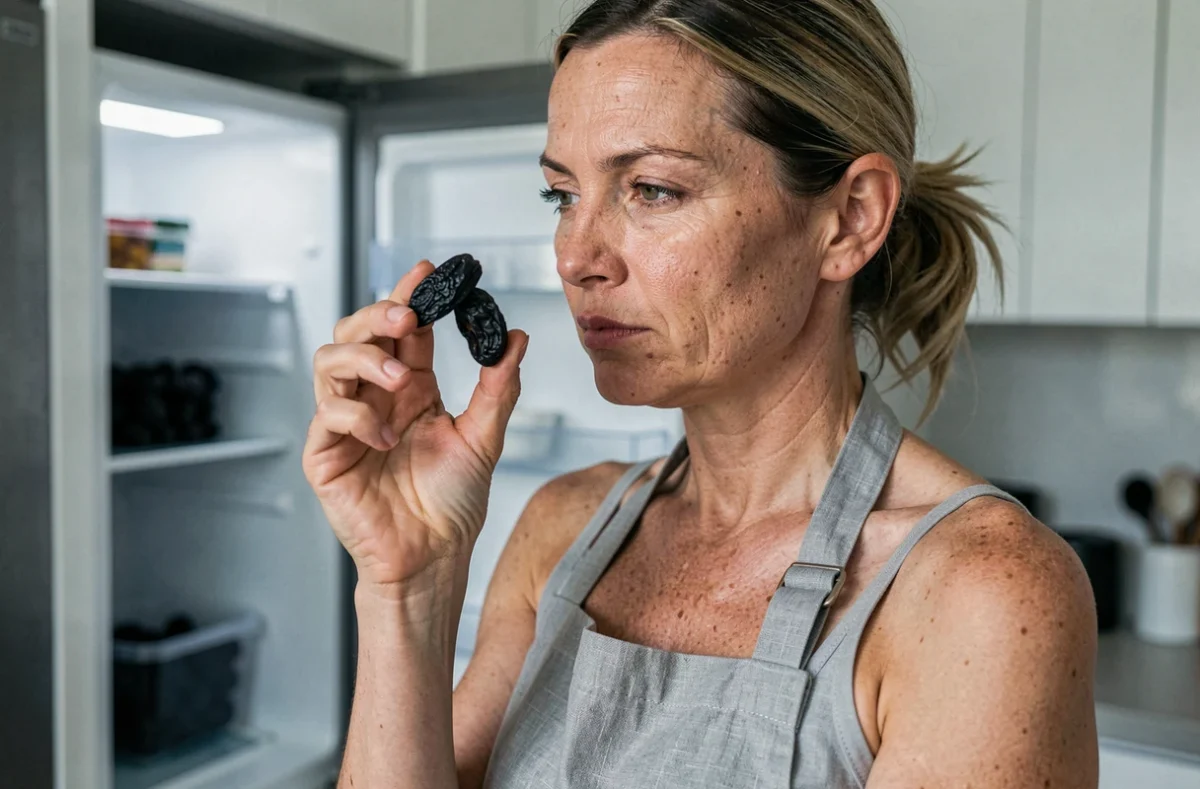
Visual and olfactory examination remains the best tool to determine the consumption of a prune past its DDM. We use a simple grid, applicable without equipment.
Rejection criteria
- Presence of filaments or white/green spots on the surface (visible molds).
- Vinegary, acetic, or fermented smell upon opening the bag.
- Unusual sticky texture with the exudation of brownish liquid.
- Pungent or sour taste during a test on a single fruit.
Acceptance criteria
A prune that is simply hardened or slightly dried on the surface is not dangerous. The loss of softness indicates residual evaporation, not contamination. This prune is still suitable for cooking (compotes, tagines, sauces) where rehydration restores a proper texture.
A slight sweet whitening on the surface (crystallization of naturally occurring sorbitol) is easily distinguished from mold: it does not form a fluffy relief and does not emit any odor. This phenomenon is normal and poses no health risk.
Real risks and cases where vigilance is required
For a properly stored prune whose DDM has been exceeded by a few months, the health risk remains low for a healthy adult. The situation changes for sensitive populations: young children, immunocompromised individuals, pregnant women. For these groups, we recommend strictly adhering to the DDM and not relying solely on sensory evaluation.
A bag left open for several weeks at room temperature in a humid environment (poorly ventilated kitchen) accumulates risk factors. The combination of an exceeded DDM and inappropriate storage justifies discarding the product without hesitation, even in the absence of visible signs.
The prune remains one of the most tolerant dried fruits in terms of preservation. Its richness in sugars and fibers, combined with its low water activity, gives it a natural durability that few foods share. The refrigerator provides additional storage comfort, as long as the humidity of the container is controlled. After the DDM, the nose and eye are better judges than the printed date.