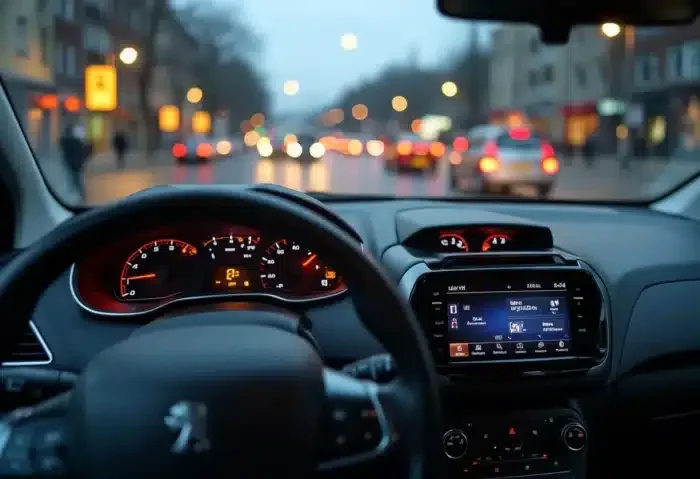
Peugeot 208 owners frequently encounter issues related to the engine warning light. This indicator, often a source of anxiety, can illuminate for various reasons. Among the most common causes are problems with the lambda sensor, the catalytic converter, or the spark plugs.
Fortunately, several solutions exist to resolve these troubles. An electronic diagnostic can precisely identify the origin of the problem. Generally, it is enough to replace the faulty part to restore order. Regular maintenance and the use of quality fuels also play a fundamental role in preventing the appearance of these annoying warning lights.
Understanding the warning lights on the Peugeot 208 dashboard
The dashboard of the Peugeot 208 is filled with essential warning lights for driving and maintaining the vehicle. Among the most concerning, the engine warning light indicates an anomaly in the engine or its components. Understanding these lights allows for appropriate reactions and helps keep the vehicle in good condition.
Various factors can trigger the engine warning light on the Peugeot 208. A faulty lambda sensor can disrupt the air/fuel mixture, while a damaged catalytic converter increases harmful emissions. Worn or defective spark plugs prevent proper combustion. The air flow meter measures the amount of air entering the engine; a failure of this component can alter the air/fuel ratio. Even a simple fuel tank cap that is not properly closed can activate the engine warning light.
The Peugeot 208 warning light is not limited to the engine. The brake fluid warning light, for example, indicates a low brake fluid level, which is crucial for optimal braking system performance. The temperature warning light signals an engine overheating, requiring immediate checking of the coolant level. The tire pressure warning light alerts to inadequate pressure, affecting handling and fuel consumption.
When an orange warning light illuminates on the dashboard, it generally indicates a problem requiring prompt but non-urgent intervention. Causes can vary, ranging from a faulty sensor to a minor anomaly in the exhaust system. A precise electronic diagnostic can determine the origin of the problem and prevent more serious damage.
Practical solutions to resolve engine warning light issues
When the engine warning light is on, several actions should be taken to diagnose and resolve the issue. The multi-brand diagnostic tool, often used by mechanics, allows reading the error codes stored in the vehicle’s OBD-II system. This provides a precise indication of the source of the malfunction.
Here are some common interventions:
- Checking and replacing the lambda sensor, essential for an optimal air/fuel mixture.
- Inspecting the catalytic converter for possible blockage or damage.
- Checking the spark plugs and the ignition coil, often responsible for combustion misfires.
- Examining the mass air flow sensor, which can affect engine performance.
If the problem persists after these initial checks, a more in-depth intervention may be necessary. A qualified mechanic can test the exhaust system, check fluid levels, and ensure that the battery and timing belt are in good condition.
The role of the garage is fundamental in this process. With sophisticated tools and expertise, they can not only quickly identify problems but also propose suitable solutions. Do not underestimate the importance of regular consultations to avoid costly repairs in the long run.
Remember that some warning lights, even if they seem minor, can have serious implications for the safety and performance of the vehicle. Take necessary measures as soon as an engine warning light appears on your Peugeot 208.