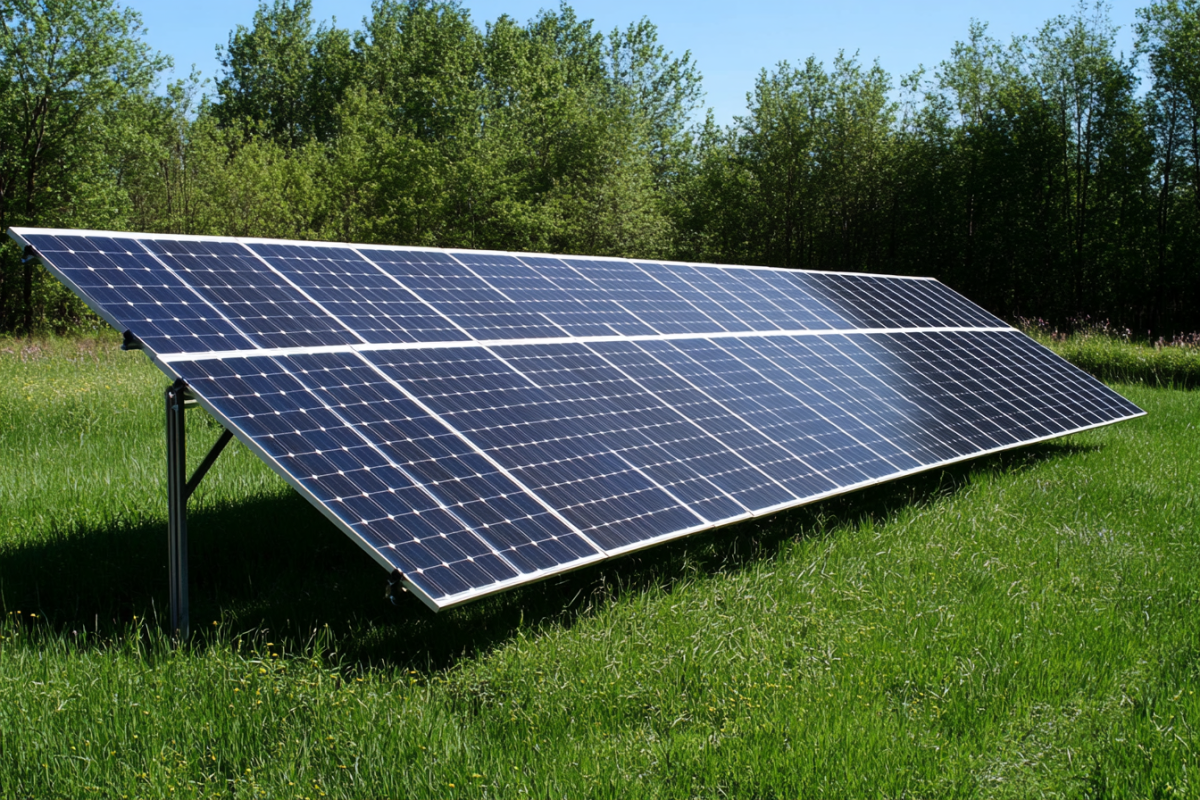
As the world shifts towards more sustainable energy sources, the role of solar panels in the energy transition is more relevant than ever. These devices, which capture and convert sunlight into electricity, offer a promising solution to current environmental challenges. Indeed, with the gradual depletion of fossil resources and rising energy prices, solar energy appears as a viable and environmentally friendly alternative. Not only does it help reduce carbon footprints, but it also provides increasing energy independence for households and businesses. In this context, understanding how solar panels work, their benefits, and the challenges associated with their use is essential to fully leverage this technological innovation.
How Solar Panels Work
Understanding the underlying mechanism of solar panels allows us to appreciate their efficiency and contribution to renewable energy.
- Each panel consists of photovoltaic cells that capture photons from sunlight and convert them into electricity through the photovoltaic effect.
- These cells are generally made from silicon, a semiconductor material that facilitates the conversion of solar energy.
- Modern solar systems are often equipped with inverters that convert the direct current produced by the cells into alternating current usable by our household appliances.
- Finally, storage devices, such as solar batteries, allow excess energy to be stored for later use, ensuring a continuous supply even in the absence of direct sunlight.
Economic and Environmental Benefits
Solar panels offer numerous advantages, both economically and environmentally.
Economically, installing solar panels can lead to significant savings on electricity bills. By producing their own energy, households can reduce their dependence on traditional energy suppliers. Moreover, with technological advancements and government incentives, installation costs have decreased significantly, making these installations more accessible.
From an environmental perspective, solar energy is a clean and renewable source. By reducing CO2 emissions, it contributes to the fight against climate change. The environmental impact of manufacturing and recycling panels is also minimized thanks to increasing efforts in sustainable resource management.
Challenges and Limitations of Solar Panels
Despite their advantages, solar panels present certain challenges that need to be considered for wider adoption.
- Climate variations, such as cloudy or rainy days, can affect energy production and require effective storage solutions to mitigate these interruptions.
- The space required to install enough panels to generate the necessary energy can be a barrier, especially in densely populated urban areas.
- Although installation costs have decreased, they still represent a significant initial investment, which can be a hurdle for some households or businesses.
- Finally, the limited lifespan of panels and the challenges related to their recycling raise questions about the long-term sustainable management of these technologies.
Future Perspectives of Solar Energy
Solar panels continue to evolve, promising technological advancements that could transform our energy approach.
Innovation in materials, such as the development of perovskite solar cells, promises increased efficiency at lower costs. These new technologies could revolutionize the solar market by allowing easier integration into various environments, including urban ones.
Moreover, integrating solar panels into existing infrastructures, such as roads and buildings, offers interesting expansion opportunities. This integration could optimize space usage while increasing energy production.
Finally, with the rise of storage technology and improvements in smart grids, solar energy could become a primary energy source, thereby enhancing the energy independence of nations.
In the face of energy and environmental challenges, solar panels represent a promising path towards a more sustainable future. Their applications, whether residential, industrial, or commercial, demonstrate their potential to transform our relationship with energy. As technologies continue to advance and costs decrease, their adoption could accelerate, playing a key role in the global energy transition. To understand the profitability of this option, you can learn more about solar panels and their impact on household economics. The future of energy looks increasingly bright under the sun.